

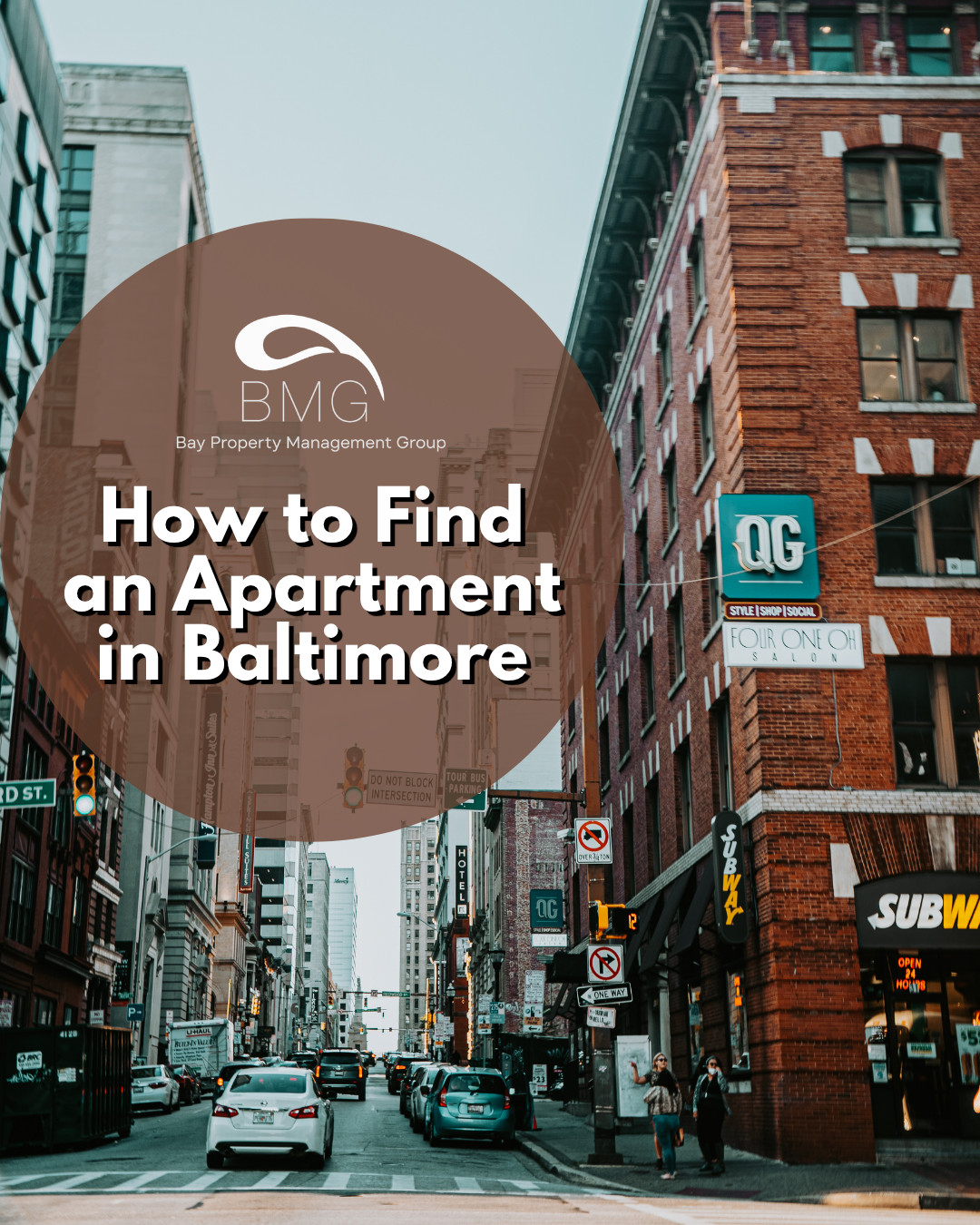
Finding an apartment in Baltimore can feel overwhelming, especially if you’re new to the city or renting for the first time. This guide walks you through everything you need to know — from rental requirements and budgeting to neighborhood tips, tenant rights, and what to expect from the application process. Read on for a clear, step-by-step look at how to find the right place.
Main Takeaways
- Renters in Baltimore need to meet certain criteria, including a minimum age of 18, an income threshold (typically 3x the rent), and credit screening. Upfront costs such as security deposits and renter’s insurance may also apply. You can ask any landlord how they screen applicants, and lawful sources of income, including housing vouchers, are accepted where required by law.
- Popular rental areas include Federal Hill (walkable and vibrant), Canton (a balanced mix of waterfront and city energy), and Mount Vernon (historical charm with a quieter atmosphere).
- Use trusted rental sites, apply filters, schedule in-person tours, ask key questions, and act quickly on strong listings. Budgeting beyond rent — including utilities, insurance, and move-in costs — helps you avoid financial surprises.
 Step 1: Understand Baltimore Rental Requirements
Before you fall in love with an apartment in Baltimore, you should know what landlords are actually looking for. The rules are pretty standard, but a few things might surprise you. If you want to get a better sense of how the rental process works from the inside, browsing through trusted Baltimore property management resources can give you a clearer picture of what to expect – and what to prepare for.
So, what are the requirements to know in terms of how to find an apartment in Baltimore? Let’s break them down:
- You must be at least 18 years old to sign a lease. In Baltimore, age is a protected class for applicants 18 and older, so landlords cannot set a higher minimum age to screen out younger adults.
- Your income matters. Most landlords want to be sure you make at least three times the rent. So, if the rent is $1,200, your monthly income should be 3X that: around $3,600. This helps ensure you can comfortably cover rent and still handle other bills. Also note that your income will be verified — acceptable documentation includes offer letters, pay stubs, W-2s, tax returns, child support orders, and government subsidies.
- Applicants can ask how a landlord screens. Screening is a big part of the process. For example, they likely will check your income and credit score. Of course, each landlord has their own policies, but most primarily want to see that you are financially qualified. Screening typically uses a consistent set of criteria that may include rental history, income verification, credit review, and other factors evaluated in accordance with applicable fair housing laws. Don’t hesitate to ask what the criteria are before you apply.
- Things like rental history and references from previous landlords are considered.
- Lawful sources of income, including housing vouchers, are accepted where required by law. If you use a voucher, the income requirement is applied to your portion of the rent, not the full contract rent.
- Be ready for some upfront costs. You will most likely need to pay a security deposit, which is often equivalent to one month’s rent. Also, add to that list your first month’s rent (and possibly a rent deposit).
- Some places ask for renter’s insurance. It’s not always mandatory, but many landlords require tenants to have it. It helps you cover any damage or unexpected issues that may arise during your tenancy.
Step 2: Know Some Great Neighborhoods to Live in Baltimore
As you can imagine, knowing how to find an apartment isn’t just about the home itself – it’s about the neighborhood energy, how far you are from work or brunch, and whether you feel safe and settled when you walk in the door. Here are three of the most-loved Baltimore neighborhoods where renters genuinely enjoy living:
Federal Hill
If you like your neighborhood with a side of skyline views, rooftop vibes, and serious walkability, Federal Hill is where it’s at. It’s one of Baltimore’s most vibrant spots. You’ve got local cafes, weekend farmers’ markets (Baltimore Farmers’ Market & Bazaar), a quick walk to downtown, and yes, plenty of nightlife.
Housing options here range from stylish apartments to charming historic rowhomes. Plus, the neighborhood just has that cutting-edge, chic feeling.
Canton
Canton offers the perfect balance between urban energy and waterfront calm. Whether you’re jogging along the harbor, grabbing dinner at O’Donnell Square, or just hanging out in a peaceful corner street, it always feels balanced here.
Renters love Canton because it feels tight-knit without being boring. You’ve got old-school brick rowhomes, newly built apartments, and everything in between. It’s ideal for people who want city perks without the downtown chaos.
Mount Vernon
Mount Vernon is Baltimore’s elegant soul. Picture brownstones, tree-lined streets, and architecture that gives classic movie scene energy. It’s home to museums, music venues, and quiet corners where creatives, students, and professionals all feel at home.
It’s less loud, more refined – but never dull. This area is ideal for anyone looking for style, history, and a calmer pace of life while staying close to the city center.
Step 3: Do the Apartment Search
Now that you’ve got a feel for some of Baltimore’s top neighborhoods, let’s talk about how to find an apartment you love – and hopefully avoid some of the common stresses that come with it. Let’s say at this point, you know your budget, and you have a good idea of what you’re looking for. Here’s what you can do:
Start with Trusted Rental Sites
Websites like Zillow, Apartments.com, and HotPads are excellent places to start. But don’t stop there; local property management websites (like ours!) often have updated listings, fewer scams, and faster communication.
 Use Filters to Save Time
When searching online, use filters such as price range, number of bedrooms, and pet policies to narrow your results. And definitely use the map view to check how close a listing is to your workplace, school, or favorite hangouts. You want to know how living there would work in practical terms.
Don’t Rely Only on Photos—Book a Tour
Photos can look amazing… until you walk in and realize the photo angle was doing all the work. If something catches your eye, consider seeing it in person. Take a look at the space, the neighborhood, and even little things like natural lighting or hallway noise. After all, seeing is believing.
Come With Questions
Don’t just nod through the tour – ask critical questions like which utilities are included in the rent, how much the security deposit is, and what the maintenance process is like. It’s also fair to ask how the landlord screens applicants, and whether housing vouchers are accepted. These details can help you compare listings beyond just price.
Act Fast If You Find a Good Listing
Baltimore rentals — especially in popular areas like Canton, Federal Hill, and Mount Vernon — can rent quickly. If a place feels right, don’t wait. Have your documents ready: ID, proof of income, and references. A little prep now could save you from missing out later.
Step 4: Budget for Rent and Utilities
Knowing your rent budget on paper is one thing. Making sure you can live within it in real life? That’s where most renters slip up. Here are tips on how to keep your rent affordable and avoid surprise expenses while apartment hunting in Baltimore:
Use the 30% Rule as a Gut Check
Most experts recommend you spend no more than 30% of your monthly income on rent and basic utilities. So, if you make $4,500 a month, try to limit your housing expenses to $1,500 per month.
What to Include Beyond the Rent
Before you fall for a too-good-to-be-true listing, compare it to the actual monthly costs. Some rentals include utilities in the rent, yes – but some don’t, and you’ll need to cover a few things out of pocket:
- Electricity and Gas: Depending on the unit, heating or cooking might run on gas, electricity, or both. Ask what to expect monthly – it can add up.
- Water, Sewer, and Trash: Sometimes covered by the landlord, sometimes billed separately.
- Internet: Most places don’t include it. Expect to pay $50-$100 per month, depending on the provider.
- Renter’s Insurance: Usually required. It’s reasonably affordable – around $10–$20 per month – but still something to budget for.
- Parking Fees: If the listing mentions off-street parking or a garage, ask if there is an additional charge. In busy areas like Federal Hill, this matters.
- Application & Move-In Fees: Often overlooked, but they’re part of your upfront costs. Application fees in Baltimore typically range from $25–$75. Other upfront charges may include an administrative fee, pet deposit (if applicable), and your first month’s rent due at signing.
Your Rights as a Renter in Baltimore
Before you rent, it’s important to know what rights are in place to protect you. Luckily, Baltimore has several tenant rights laws in place. These don’t just shield you from unfair treatment, they also help keep you safe and secure. Here are a few key ones to know:
- Security Deposits Have Limits: Landlords in Baltimore cannot simply request any amount. By law, the security deposit can’t exceed two months’ rent.
- You Have the Right to a Safe, Livable Home: This one’s big. Your landlord is legally required to provide a place that meets basic safety and health standards, including working plumbing, heat, smoke detectors, and no leaks or mold.
- You Have the Right to Privacy: Landlords can’t just show up unannounced. They must give reasonable notice before entering your apartment, usually at least 24 hours, unless it’s an emergency.
- You’re Protected from Discrimination: Under federal Fair Housing law, landlords cannot deny you housing based on race, color, national origin, religion, sex (including sexual orientation and gender identity), familial status, or disability. In Baltimore, protections also include marital status, ancestry, age (18+), and source of income. You are entitled to ask how a landlord screens applicants.
How BMG Handles Baltimore (Maryland) Applications
For Maryland applications, we first review non-criminal criteria such as income, rental history, and credit where lawfully considered. If an applicant meets those criteria, we send a conditional offer before any criminal-history review. After a conditional offer, we may review limited, lawful criminal-history records for adult household members. Before withdrawing an offer because of criminal history, we notify the applicant and give at least 14 calendar days to submit written evidence, signed under penalty of perjury, of inaccuracies, rehabilitation, or other mitigating information. We consider factors such as the nature and severity of the offense, the applicant’s age at the time, the time that has passed, the connection to resident or property safety, and evidence of rehabilitation. Applicants may request the information we relied on within 30 days of written notice, and we provide it free of charge within 10 days.
FAQs About Finding Apartments in Baltimore
Does a criminal record automatically disqualify an applicant?
No. Where criminal history is reviewed, we assess it individually, considering the nature and severity of the offense, the time that has passed, and its relevance to a legitimate housing concern.
Do you accept housing vouchers?
Yes. We accept lawful sources of income, including housing vouchers, where required by law, and the income requirement is applied to your portion of the rent — not the full contract rent.
What credit score do I need to rent an apartment in Baltimore?
There is no single required score, since each landlord sets their own criteria. Many landlords look for a score in the 600s or higher, but rental history, income, and overall application can offset a lower score — ask any landlord what their screening criteria are before you apply.
How much is the security deposit for a Baltimore apartment?
Maryland law caps security deposits at two months’ rent, though many landlords ask for an amount equivalent to one month’s rent. The exact amount should be stated in your lease.
How much notice does a landlord have to give before entering my apartment?
Landlords must provide reasonable notice before entering, typically at least 24 hours, except in emergencies such as a burst pipe or fire.
What documents should I have ready when applying for a Baltimore apartment?
Have a government-issued ID, proof of income (pay stubs, offer letter, W-2, tax returns, or documentation of government subsidies), rental history, and references from past landlords ready to go. Having everything in one folder can help you move quickly on a listing you love.
How quickly do apartments rent in Baltimore?
In popular neighborhoods like Federal Hill, Canton, and Mount Vernon, well-priced units can rent within days. If a place feels right, submit your application quickly with all your documents attached.
 How to Find an Apartment in Baltimore Without the Stress
In terms of how to find an apartment in Baltimore, renters should start by understanding key rental requirements. Then, they should explore popular neighborhoods like Federal Hill, Canton, and Mount Vernon. Next, it’s time to explore trusted rental sites, do in-person tours, and act fast on the most popular rentals. Finally, once you’ve secured your rental, you need to map out your budget.
Still, if you’re new to the city and not sure where to start, or you’ve been here a while but finding the right apartment still feels confusing, we can help. At Bay Property Management Group, we know how this rental process really works. We’ve helped tons of renters find homes here. We’ll walk you through it: what to expect, what to ask, how to apply, and more. Wherever you’re at in your search, we’re ready to help – real people, real answers, no pressure. Explore our available listings or contact our team today.


