Deschutes Brewery founder Gary Fish, and original Brewmaster John Harris — New School Beer + Cider


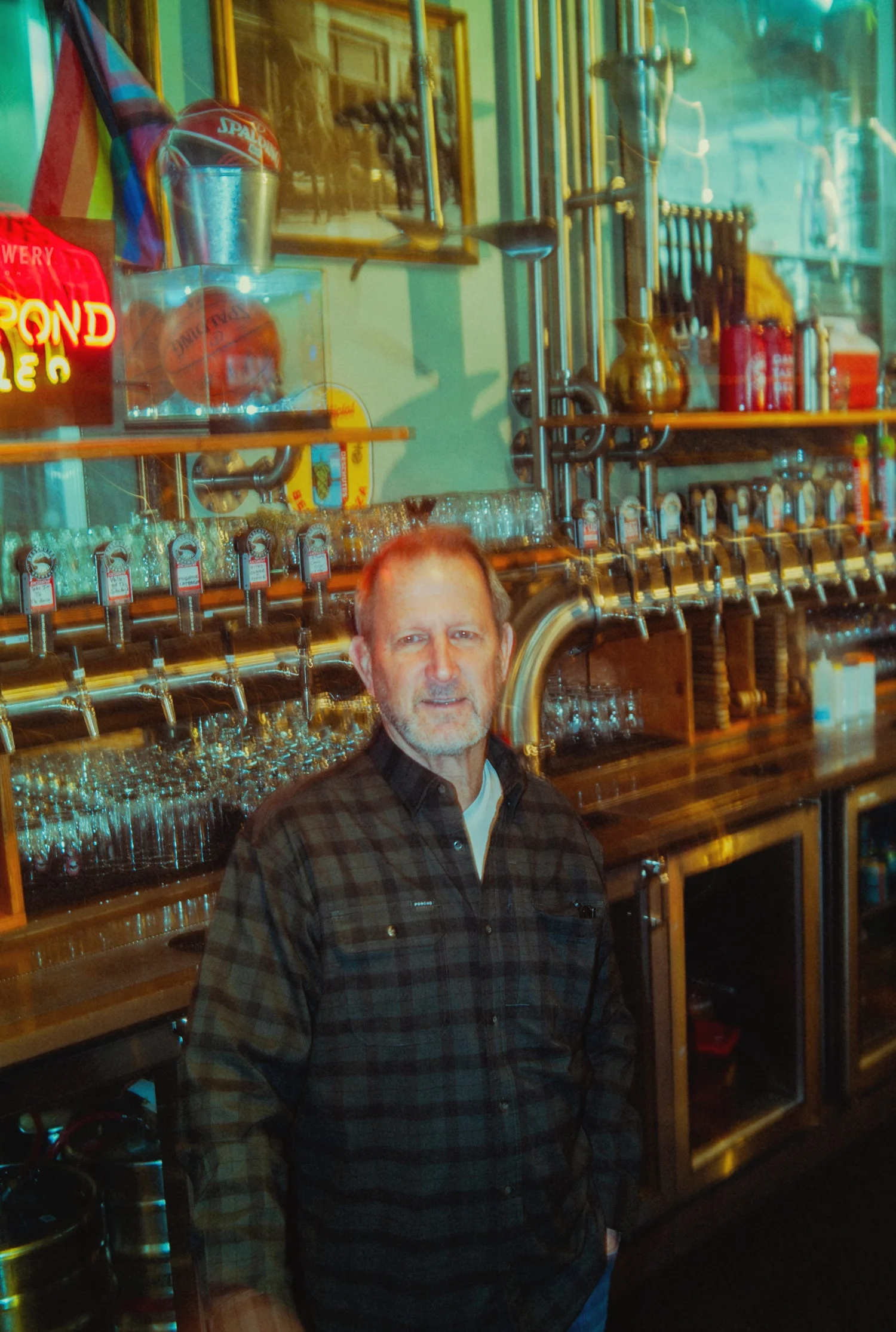
But Deschutes was still struggling. Then one day Jim Kennedy from Admiralty Beverage reached out to the brewery to let them know that a few pub owners from Portland had tried and enjoyed the beer after vacationing in Bend. Kennedy said he would love to sell some Deschutes beer in Portland taverns if they could send up some kegs, however Deschutes was just a brewpub selling beer only at their own establishment at the time.
Gary Fish: “We weren’t successful so we needed the money and we had the beer. So it was ‘sure we would love to send you some beers, do you know where we could get some kegs?’ We scrounged up some beaten up double valve golden gate kegs and began manufacturing at wholesaling and we had no idea. It was really Jim’s idea, his vision, he explained it to me as looking at the beer market as a pie. The pie for light colored beers is much larger, but its split up into much smaller pieces. But the market for dark beer is much smaller but there are fewer pieces, and as he pointed to Black Butte Porter he said ‘I think with this product you could own that whole pie’ which fit my contrarian way of looking at things. And the idea of owning part of that market appealed to all of us. And that is when we could begin to understand the value that Black Butte Porter has had and to this day it continues to garner that kind of attention. So Jim was pretty sharp.”
John Harris: “One day me and Gary were walking back from the art designer looking at the Jubelale label that was coming up. It had been about 3 weeks were it was below zero, a few weeks prior the brewery had got broken into and they stole a tri-tip, they stole my boom box which really pissed me off, you gotta have music in the brewery right? And they stole a keg of Jubelale. Well we are walking back and it was kind of sunny and I see a reflection of silver, and I look under this loading dock and sure enough these thieves had only got about half a block away with the keg before they said screw this it is too heavy and they stashed it. I saw that keg and I thought ‘oh my, its been below freezing for 3 weeks.’ So I ran up to the brewery and got the hand truck and brought the keg back. I looked at the keg and it was a golden gate keg which has the tap in the bottom and on the top. The bottom was up, so where it was frozen didn’t freeze the access to the beer. So we tapped that and it was great, it was like iced Jubel and it was really thick, so we saved that and decanted it off into another keg and saved it for special occasions. And I remember one day Tim Gossack was hauling a keg up onto the roof to try to freeze it to make more of it. But that didn’t work and it got warm.”
As Deschutes began to grow they expanded out the back of the pub and into a building behind them they used as a warehouse. They were loading up semis in the street and forklifting product around the block. Eventually the city took notice and decided they were conducting an industrial operation in the downtown commercial business district that was not allowed.
Gary Fish: “We couldn’t shrink down to what we were before, we had to find some other place to grow the business and that is when we bought the land across town where our manufacturing facility is today. That is when the challenges really began.”
As Deschutes quickly learned, large scale production and packaging brewing is very different than the brewpub scale.
John Harris: “Gary’s focus on quality and when he started to build his first production brewery which I exited right before when that was in the planning stages. Gary has just been an advocate for craft beer forever, he is passionate as hell about beer. He has volunteered on every conceivable board imaginable nationwide for beer. And building the legacy for Deschutes, especially when Black Butte Porter and Mirror Pond became so entrenched in the mid 90s and into the 2000s where you basically couldn’t go into a bar and not find those 2 beers on tap. Gary’s just driving the vision forward. He really helped during the early days of the Oregon Brewers Guild when we were trying to get some respect in the state. Gary just really took his passion and shared his passion not only with his employees but with other members of the industry. Taking his time away from his business to volunteer and making those things happen was really integral to his success and craft beer nationwide I think.”
Gary Fish: “The reception of the consumers was the best gratification. The people that came to work with us was a great gratification. They taught me so much. People like to say ‘it’s all about the beer’ but to me it was always all about the people. Whether it is the people who drink the beer, the people who make the beer, the people who sell the beer. We didn’t really understand how to manage that success in a lot of ways, but we always had those people to fall back on.”