How Difficult People Drain Time From Your Life

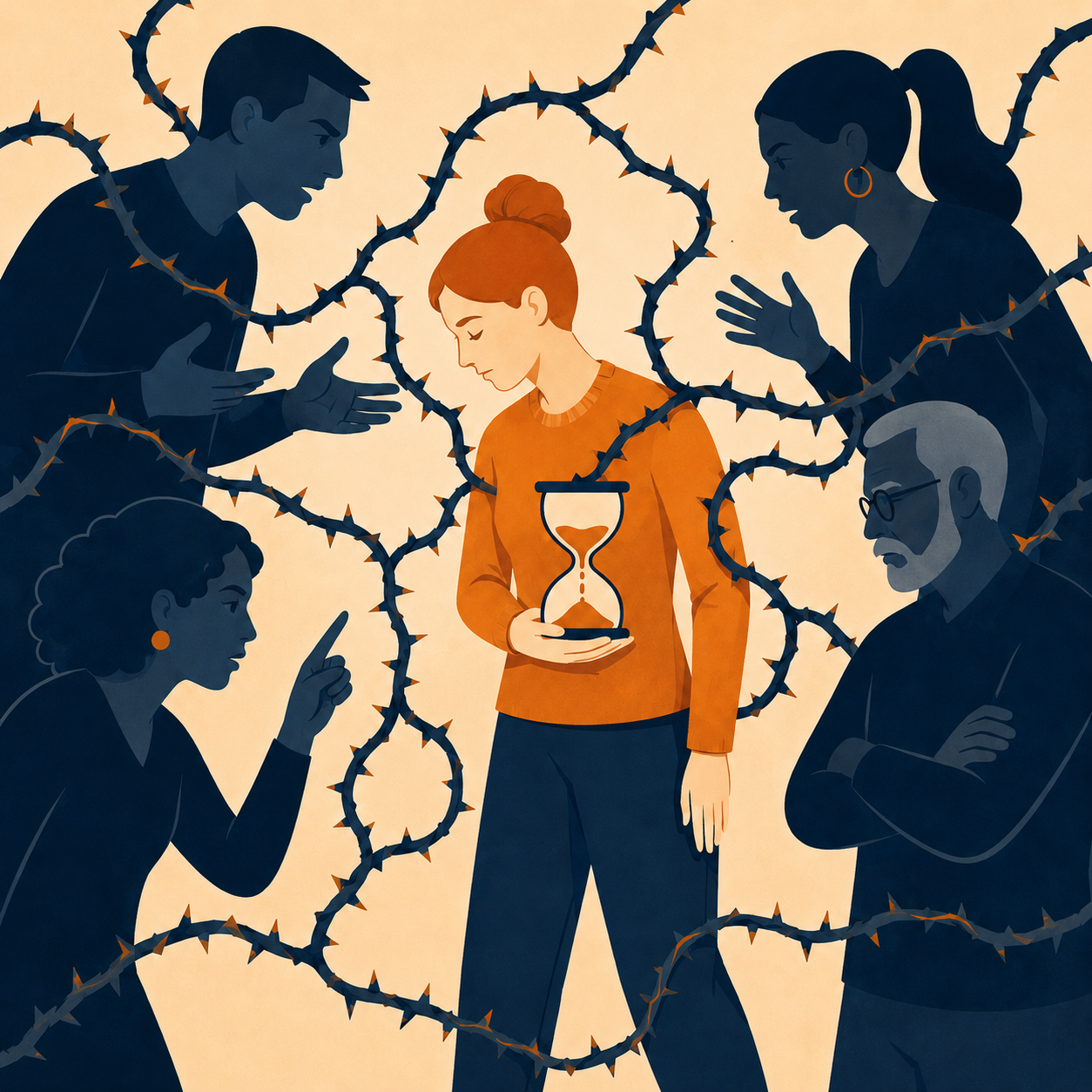
Difficult people don’t just drain your patience – they may also affect your health. New research on “hasslers” shows how persistent negative social strain can wear us down over time.
The people around us aren’t just background characters in the movie of our lives. They are an integral part of the psychological and biological environment we live inside.
Our relationships are inputs. And just as we monitor what we eat, how much we sleep, how much time we spend on screens, and whether we exercise, we should pay attention to the people and social patterns shaping us.
New research suggests that persistent negative social exposure may have measurable consequences for our health. Researchers use the word “hasslers” to describe people in our social networks who regularly cause problems, create stress, or make life more difficult.
In a representative sample of more than 2,300 adults in Indiana, researchers had participants map the people in their social networks, including how close each relationship was and what role each person played. They then asked how often each person “hassled you, caused problems, or made life difficult.” Only those rated “often” counted as hasslers.
Each additional hassler in a person’s network was associated with a roughly 1.5% faster pace of biological aging. Among people of the same chronological age, each hassler corresponded to approximately nine months of additional biological age.
More hasslers were also associated with higher inflammation, poorer mental health, and a greater burden of chronic illness. Hasslers within the family showed some of the strongest associations.
The key word is “often.”
This doesn’t mean everyone who irritates, challenges, or disagrees with us is “toxic.” The internet has encouraged people to interpret nearly every uncomfortable relationship as abusive and every conflict as proof that someone should be cut off. But a person who challenges you is not necessarily a hassler. An occasional disagreement is not a negative relationship. Someone going through a difficult period is not automatically harmful.
A hassler is better understood as someone whose presence creates a recurring pattern of strain, disruption, and instability. The issue isn’t a single bad interaction – it’s persistent negative social strain.
The family finding matters because many of the hardest relationships aren’t optional. You can’t always block, unfollow, or permanently avoid a parent, sibling, in-law, or extended family member. But duty and love can be more important than a completely “toxic-free” environment.
If the relationship cannot be removed, the conditions surrounding it can be redesigned. Some relationships improve when we change the setting, duration, expectations, activities, or topics discussed.
A relationship that becomes combative during political conversations may work better when centered on shared activities, like going to the movies or playing sports. A relative who overwhelms you during long, unstructured visits may be easier to manage over lunch, during a walk, or at a larger family gathering.
Yes, sometimes the answer is ending a relationship. But other times, it means seeing the person less often, refusing certain conversations, limiting their access to you, or no longer volunteering to solve every crisis they create. Not every difficult relationship needs an ending. Sometimes it needs one boundary or a different script that changes the pattern between you.
The ecology of your relationships isn’t only about reducing exposure to hasslers. It also means spending more time around people who steady you, challenge you constructively, and bring out the better parts of your character. Your social circle is not just company. It is an environment that can slowly build you up or wear you down.
Enter your email to stay updated on new articles in self improvement: