Can Mice Squeeze Under Doors? Entry Points & Prevention Tips


Can a mouse squeeze under a door, through a small crack in the foundation, or into other small spaces? The short answer is yes. According to Dr. Bobby Corrigan, Urban Rodentologist and Entomologist, if a no. 2 pencil can fit into a hole or crack, so can a mouse.
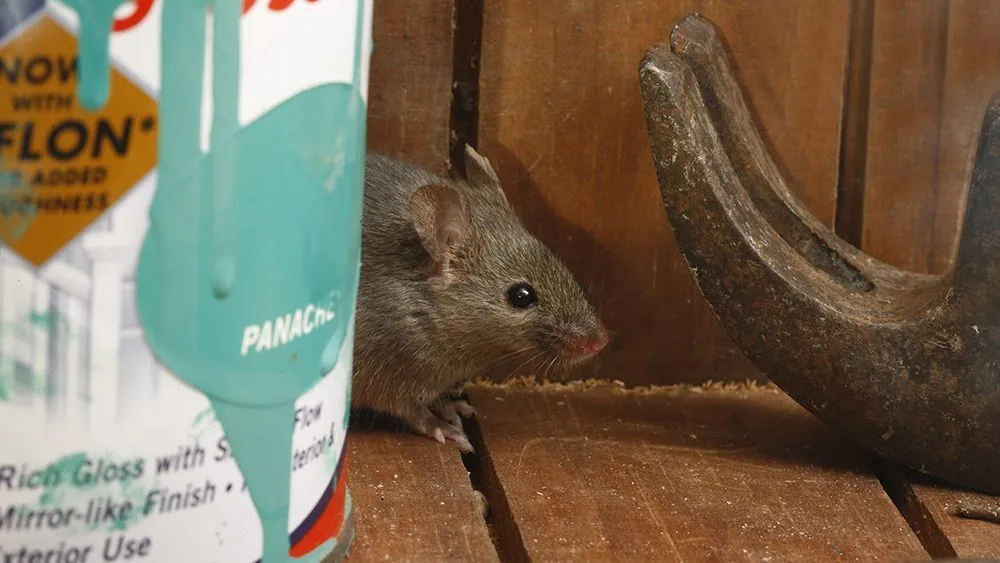
A mouse can fit through a hole about a quarter of an inch (or 6 millimeters) wide, which is the size of an adult mouse’s skull. That means even the tiniest gaps around doors, siding, and utility lines can provide an entry point.
How Can Mice Squeeze Through Small Spaces and Cracks?
As burrowing animals, mice are designed to squeeze into and live in tight spaces. A common misconception is that mice have “collapsible” skeletons, or no bones at all. Neither is true.
Mice have bones, spines, ribs, and other skeletal structures just like other mammals. However, their bodies are much smaller than their fluffy coats make them appear, and their anatomy allows for considerable flexibility. Their relatively narrow bodies and flexible ribs and shoulders help them maneuver through surprisingly small openings.
Their whiskers also play an important role in navigating their environment. Mice use them as highly sensitive touch receptors to gather information about nearby surfaces, objects, and openings. That way they can gauge the size of an opening before going through.
Where Mice Squeeze In: Most Common Entry Points
Because mice can climb rough vertical surfaces, homeowners should inspect the entire exterior of the house rather than focusing only on openings near the ground.
- Gaps under exterior doors: Worn weatherstripping or missing door sweeps can leave enough room for a mouse to slip underneath.
- Garage doors: Gaps along the bottom or corners of garage doors are particularly easy to miss.
- Utility penetrations: Openings where plumbing, electrical wiring, cable lines, or HVAC equipment enter the home can leave small gaps around them.
- Siding gaps: Loose or damaged siding can expose openings that lead into wall voids.
- Weep holes and brick veneer: Openings around brickwork can provide access if they aren’t properly protected.
- Foundation cracks: Even a small crack or gap can become a potential entry point.
- Rooflines and eaves: Mice are capable climbers, so entry points aren’t limited to ground level. Gaps around soffits, fascia, vents, and rooflines can also provide access.
- Windows and vents: Damaged screens or poorly sealed frames can give rodents another way inside.
Checklist to Prevent Mice from Getting Into Your Home
Once you’ve identified cracks, gaps, and other potential entry points, the next step is making your home less accessible and attractive to rodents.
- Fill gaps with steel wool or copper mesh: Avoid using expanding foam, which rodents can chew through.
- Declutter: Get rid of anything that would be a good hiding place for rodents to shelter. That could include storing outdoor furniture, Christmas decorations, or firewood piles.
- Get rid of nesting materials: Mice can make nests out of paper, cardboard boxes, and any soft materials. Be sure they’re out of your garage or storage sheds.
- Remove food sources: Move any dog food, bird seed, etc. that may be in your garage.
- Install rodent-safe door sweeps: Inspect the bottom of all doors, including garage doors. If you see damage to seals, weatherproofing, etc., consider adding door sweeps specifically designed to keep rodents out.
- Repair screens: Examine window and vent screens (especially in your crawlspace) for holes.
- Trim vegetation: Be sure to cut back any trees or other plants that touch your home. Foliage can act as bridges that give rodents a direct pathway to your home.
How SMART Monitoring Systems Can Help
According to our recent report, 67% of homeowners in America have experienced a rodent infestation. And with a quarter-inch gap being hard to find, some additional monitoring can give you peace of mind.
Consider Anticimex SMART electronic rodent control. This eco-friendly, pesticide-free system monitors your home 24/7 and wirelessly alerts your pest control professional when it detects mouse activity. That way a licensed professional can respond before a small problem gets out of hand.
FAQs About Rodent Prevention
Can a mouse fit through a hole the size of a dime?
Yes. A dime is about 0.7 inches in diameter, which is significantly larger than the roughly 1/4-inch openings mice can potentially enter. If you find a dime-sized opening around your home’s exterior, it should be considered a potential mouse entry point.
What size hole can a rat fit through?
Rats are larger than mice and can generally squeeze through a half-inch hole. However, they are also strong gnawers and can enlarge vulnerable openings. Because both mice and rats can exploit surprisingly small gaps, a thorough rodent-proofing strategy should address cracks, holes, vents, doors, and utility penetrations throughout the exterior.
What can mice chew through?
Mice can gnaw through many relatively soft materials, including plastic, rubber, vinyl, wood, and insulating foam. That’s why expanding foam alone generally isn’t the best solution for rodent exclusion. More durable materials such as metal, hardware cloth, or concrete may be needed depending on the location and size of the opening.
Can mice climb walls?
Mice are excellent climbers and can scale many rough vertical surfaces. They can also travel along wires and other narrow pathways, which is why rodent inspections should include rooflines, vents, eaves, and other areas above ground level.
What time of year do mice come indoors?
Mice can enter homes at any time of year, especially when food and shelter are readily available. At Modern Pest Services, we notice an uptick in rodent activity at the end of summer and beginning of fall in New England.
Should I call a professional preventatively?
If you’re concerned about mice getting into your home, you don’t have to wait until you see signs of an infestation to call a professional. A pest control professional can inspect your home for hard-to-spot gaps and vulnerabilities, identify potential entry points, or set up a smart monitoring system.